Investor Onboarding and Unit Registry for Australian Wholesale Funds

For managers of Australian wholesale funds replacing paper application packs and spreadsheet registers.
Quick answer
An Australian wholesale fund confirms each investor qualifies as a wholesale client, runs AML/CTF checks, accepts their application money and issues units into the unit registry. Doing this digitally replaces paper application packs with one workflow: online application, identity and sanctions checks, a wholesale eligibility check, then units recorded in a live register. On Aerapass, every holding lands in one investor register.
What Rules Apply to an Australian Wholesale Fund?
A fund offered only to wholesale clients usually runs as an unregistered managed investment scheme under the Corporations Act 2001. Because it takes no retail investors, it generally does not have to be registered with ASIC or have a responsible entity, which gives the manager more flexibility in how the fund is structured.
That flexibility does not reduce the AML/CTF duties. Where the fund provides designated services under the Anti-Money Laundering and Counter-Terrorism Financing Act 2006, it needs documented customer due diligence and a risk-based AML/CTF program. Australia’s updated AML/CTF laws took effect on 31 March 2026, with updated obligations, including customer due diligence, for existing reporting entities (AUSTRAC).
Before accepting money, the manager must confirm each investor is a wholesale client under section 761G of the Corporations Act. The common routes are:
- Product value: the investor puts in A$500,000 or more.
- Accountant’s certificate: a qualified accountant certifies net assets of at least A$2.5 million, or gross income of at least A$250,000 in each of the previous two years. The certificate is valid for up to two years after it is issued (ASIC).
- Professional investor: for example, an AFS licensee, or a person controlling gross assets of at least A$10 million.
The thresholds have not changed since they were introduced. A February 2025 parliamentary committee report found that the case for raising them “has not been established at this time” and recommended a periodic review instead (Parliament of Australia). ASIC renewed its call to raise them in November 2025 (ASIC, REP 823).
Which KYC and AML Checks Does Each Investor Need?
Every application, whether from an individual, a company or a trust, needs a documented KYC and AML check before units are issued.
For individuals, that means identity verification, name and sanctions screening, address validation and document authenticity checks. For companies, the workflow adds a company registration lookup, beneficial owner discovery and ownership mapping, director and shareholder verification, sanctions screening and a check of the business activity. For trusts, it covers the trust structure, verification of the trustee, settlor and beneficiaries, an assessment of control and ownership, and sanctions screening.
In Australian wholesale funds, trusts and companies are common investors, so the entity checks matter as much as the individual ones. A self-managed super fund, a family trust and a private company each need their own path through the same process.
The compliance record should not stop at subscription. An investor may change their entity structure, add a beneficiary or move country, and each change needs fresh checks. One customer management layer that covers onboarding, monitoring, changes and exit keeps that history in one place.
For funds raising from investors overseas, fast-track verification in 200+ countries means an investor in Singapore or Hong Kong goes through the same process as one in Sydney.
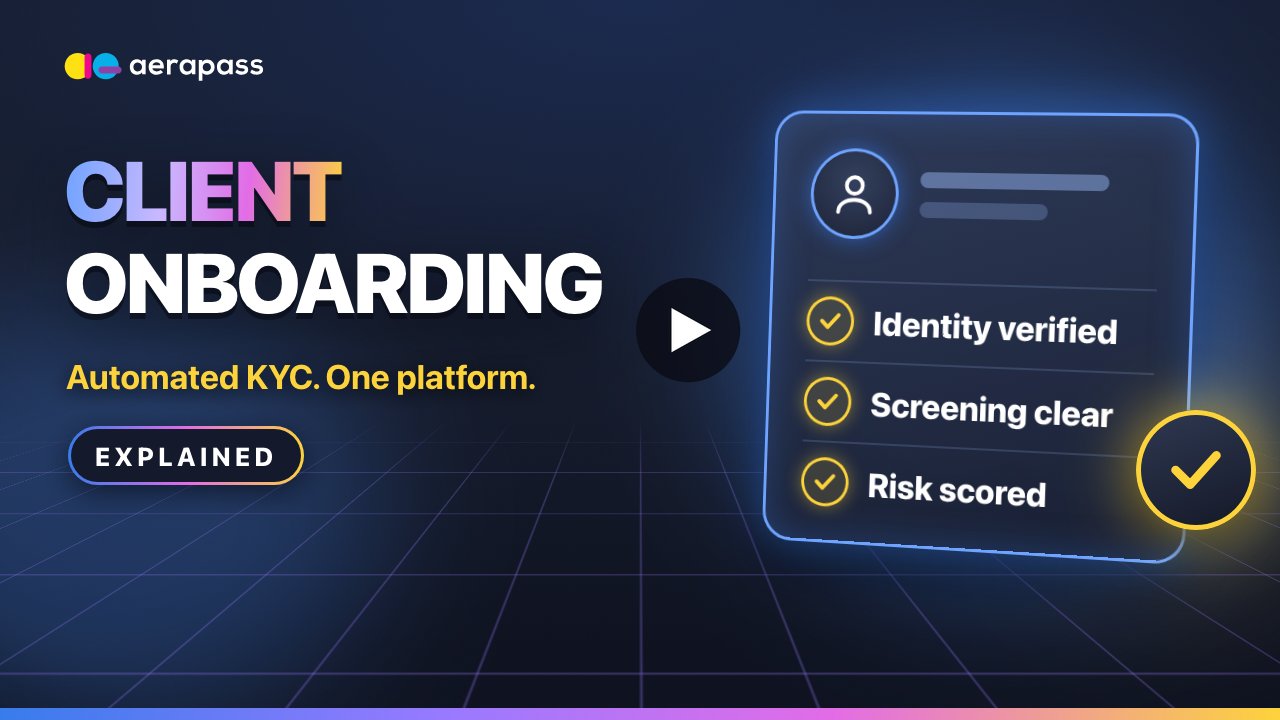
Watch the explainer: Client Onboarding Software Explained: How Automated KYC Saves Time
Onboarding companies and trusts as well as individuals? Aerapass Customer Management runs Wolfsberg Group-compliant KYC and AML checks, with fast-track verification in 200+ countries and automated sanctions, PEP and adverse media screening. Explore Aerapass Customer Management
What Does a Unit Registry Do?
The unit registry is the fund’s authoritative record of who owns how many units. For an Australian wholesale fund, the core registry tasks are:
- keeping unitholder records up to date
- processing applications and redemptions
- calculating and paying distributions of income or returns of capital
- reconciling the application and distribution bank accounts
- issuing unitholder, distribution and annual tax statements
Many managers outsource these tasks to a registry provider, while others run them in-house. Either way, the register has to match the money: every unit issued needs matching application money, and every distribution needs a matching payment.
On Aerapass, the investor register and the administration tools for capital calls, redemptions, distributions and NAV sit on one platform. Agree with your registry provider or accountant how distribution and tax statements will be produced.
Holdings are recorded in the investor register on an internal or blockchain ledger, so the manager always has a current holder list. Our guide to tokenised fund units explains how the blockchain option works. Investors use a branded portal to review offer details, performance, minimum investments, closing dates and documents, and invest in the currency they choose, including stablecoins alongside bank transfers.
Because the register logic works the same way across structures, one platform can run funds holding loans, property or mixed assets without a separate investor register for each.
How Does Automation Speed Up Onboarding Without Cutting Corners?
Onboarding is the first operational experience investors have with a fund. Slow, paper-based processes have a direct cost: capital that could be invested sits idle while documents move between inboxes.
On Aerapass, individual investors complete fully automated onboarding in 2 to 5 minutes when their information is complete. The speed comes from removing manual steps, not from skipping checks: KYC and AML, risk reviews and customer lifecycle management run in the background.
Aerapass is a white-label platform, so investors see the manager’s brand on the portal, not Aerapass’s. The manager sets the base currency, unit price, subscription limits and offer dates, attaches the information memorandum and disclosures, controls allocation and decides who can invest. Deployment takes weeks rather than months.
| Individual investor | Corporate investor | Trust investor | |
|---|---|---|---|
| Key checks | Identity, sanctions, address, document authenticity | Company registration, beneficial owner mapping, director and shareholder verification, sanctions, business activity | Trust structure, trustee, settlor and beneficiary verification, control and ownership, sanctions |
| Automated time on Aerapass | 2 to 5 minutes | 5 to 15 minutes | 10 to 20 minutes |
| When it takes longer | Information is incomplete | 1 to 3 business days if additional review is required | 1 to 3 business days if data is incomplete or manual review is needed |
Onboarding times depend on jurisdiction, data availability and customer complexity.
How It Works: Five Steps From Application to Unit Registry
1. Confirm wholesale eligibility first
Before collecting identity documents, ask the investor which wholesale test they rely on and collect the evidence: the investment amount, an accountant’s certificate issued within the last two years, or proof of professional investor status. Only investors who pass this gate move on to KYC, so the fund does not collect sensitive personal data from people it cannot accept.
2. Run automated KYC and AML for individuals
Individual investors go through identity verification, name and sanctions screening, address validation and document authenticity checks. If something is missing, onboarding takes longer until the investor supplies it. Every result is saved to an auditable onboarding record.
3. Verify companies and trusts in depth
For a company, run the registration lookup, beneficial owner discovery and ownership mapping, director and shareholder verification, sanctions screening and business activity check: 5 to 15 minutes when automated, or 1 to 3 business days with extra review. For a trust, add structure analysis and trustee, settlor and beneficiary verification: 10 to 20 minutes, or 1 to 3 business days.
4. Accept application money and issue units
Once the investor passes KYC and AML, they confirm they have read the information memorandum and risk disclosures, then pay their application money in their chosen currency. Subscription money can wait in escrow until the offer closes. Units are then issued at the configured price and recorded in the investor register on an internal or blockchain ledger.
5. Run the register for the life of the fund
Further applications, redemptions, capital calls and distributions go through the same system, so the register stays current without reconciling separate tools. Investors see changes in their portal. Set a review cycle for accountant’s certificates, so an investor’s evidence is refreshed before it passes two years and their next application can still be accepted.
What Are the Benefits for an Australian Wholesale Fund?
Onboarding 40% to 60% faster
Aerapass delivers 40% to 60% faster onboarding, with automated KYC and AML checks and risk reviews running in the background, so a raise is not held up by paperwork.
Verification in 200+ countries
Wolfsberg Group-compliant AML and KYC, with fast-track verification in 200+ countries, means an international wholesale investor goes through the same structured process as one in Australia, without a separate manual workflow for each country.
Individuals, companies and trusts on one platform
Individual, corporate and trust investors each have their own verification path on the same platform. The customer management layer covers identity, risk and compliance across onboarding, monitoring, changes and exit, so the record stays complete after the first subscription.
One register for every fund
Holdings sit in one investor register on an internal or blockchain ledger, with administration tools for capital calls, redemptions, distributions and NAV. A manager running several trusts uses the same register logic for each, instead of a separate investor register per fund.
Frequently Asked Questions
How long is an accountant’s certificate valid for a wholesale investor?
Up to two years after it is issued, according to ASIC. The certificate must come from a qualified accountant: a member of CA ANZ, CPA Australia or the Institute of Public Accountants at the declared membership level, who meets their body’s continuing professional education requirements. Track each certificate’s issue date in the onboarding file, so you know when to ask for a new one.
Does a wholesale-only fund need to be registered with ASIC?
Generally not. A managed investment scheme offered only to wholesale clients usually runs as an unregistered scheme, without a responsible entity. The manager or trustee still needs the right Australian financial services licence or exemption, and the AML/CTF rules still apply where the fund provides designated services. Confirm the structure with your lawyers before the first offer.
Which AML and KYC standards does Aerapass apply?
Aerapass is built to meet international AML standards, including FATF recommendations and the Wolfsberg Group’s Financial Crime Compliance Questionnaire. Every investor goes through identity verification and sanctions, PEP and adverse media screening, with deeper checks for companies and trusts. The fund remains responsible for its own AML/CTF program under Australian law.
Can international investors use the same onboarding process?
Yes. Fast-track verification covers 200+ countries, so a wholesale investor in Singapore, Hong Kong or Canada completes the same structured process as one in Australia. Each investor must still qualify as a wholesale client under Australian law. Investors can subscribe in the currency they choose, and every holding is recorded in the same investor register.
What happens when an investor’s application is incomplete?
It takes longer. For an individual investor, onboarding takes longer until the missing information is supplied. A company account can take 1 to 3 business days if additional review is required, and a trust account 1 to 3 business days if data is incomplete or a manual review is needed. Asking for every document up front, with a checklist for each investor type, avoids most delays.
Running a wholesale fund in Australia? Aerapass brings wholesale investor onboarding and KYC, multi-currency applications, escrow, the investor register and a branded investor portal onto one platform under your brand, with deployment in weeks rather than months. See how Aerapass supports fund managers
The content on this page is produced by Aerapass for general informational purposes only and does not constitute financial advice, investment advice, or any other form of professional advice. Aerapass is a technology platform provider serving financial institutions, wealth managers, and fintech companies. Before making any financial decision, you should consult with a qualified, licensed financial advisor who can take your individual objectives and circumstances into account.