Tokenized Precious Metals: Beyond Gold
Key Takeaways
- Gold tokenization is now a market of more than $5 billion (CoinGecko, Oct 2026), dominated by established products like PAXG and XAUT - but silver, platinum, and palladium remain largely untokenized.
- Tokenized silver is the most developed non-gold category, with products like Kinesis KAG and Lode AGX offering physically backed digital ownership.
- Tokenised palladium and platinum face unique tokenization challenges: smaller markets, concentrated supply chains, and lower retail liquidity.
- Non-gold precious metals carry distinct industrial demand profiles - silver in solar energy, platinum in hydrogen fuel cells, palladium in catalytic converters - that create different investment dynamics from gold’s store-of-value positioning.
- Regulatory frameworks including MiCA in Europe and MAS rules in Singapore can apply to commodity-backed tokens depending on how they are structured, though coverage varies by jurisdiction.
Gold tokenization is now well-established. Products like Paxos Gold (PAXG) and Tether Gold (XAUT) have built a combined market of more than $5 billion (CoinGecko, 7 Oct 2026), giving investors fractional, blockchain-based access to vaulted physical gold. Each PAXG token, for example, represents one fine troy ounce of a London Good Delivery gold bar (Paxos). For a detailed breakdown of how gold tokenization works, see our guide to gold tokenization.
But gold is only one of four major precious metals traded globally. Silver, platinum, and palladium each carry distinct supply dynamics, industrial demand profiles, and investment characteristics - yet their tokenization stories are far less developed. For institutional investors, wealth managers, and fintech platforms evaluating multi-asset digital strategies, understanding where these metals stand in the tokenization lifecycle is essential.
Tokenised Silver: Market Size, Products, and How It Works
Silver occupies a unique position among precious metals. Unlike gold, which derives most of its value from investment demand and central bank reserves, silver functions as both an investment asset and an industrial commodity. Over 50% of annual silver demand comes from industrial applications, including solar panel manufacturing, electronics, and electric vehicle components: industrial demand was 657.4 million ounces of 1.13 billion ounces of total demand in 2025 (The Silver Institute, World Silver Survey 2026).
This dual role makes tokenized silver a fundamentally different proposition from tokenized gold. When investors hold a silver token, they are exposed not just to monetary policy and inflation hedging, but also to manufacturing cycles, green energy adoption rates, and semiconductor demand.
Current Tokenized Silver Products
Several platforms have launched silver-backed digital tokens, though the market remains significantly smaller than its gold counterpart - CoinGecko’s tokenized silver category was worth less than $250 million in early October 2026, most of it KAG (CoinGecko, 7 Oct 2026):
- Kinesis KAG - Each KAG token is backed by one ounce of silver bullion held in insured, audited vaults (Kinesis; CoinGecko). Kinesis operates a yield-bearing system where KAU and KAG holders share in a portion of Kinesis transaction fee revenue (Kinesis).
- Lode AGX - Available on the Avalanche blockchain, each AGX represents one gram of vaulted, investment-grade silver, redeemable for physical silver in multiples of 100-troy-ounce bars (Lode AGX terms).
How Silver Tokenization Works
The mechanics mirror gold tokenization in most respects. An issuer acquires physical silver meeting recognized purity standards (typically at least .999 fine silver, the wholesale market standard per the LBMA), deposits it in an audited vault facility, and mints a corresponding number of digital tokens on a public blockchain. Each token represents a defined weight of silver - typically one troy ounce or one gram, depending on the platform.
Token holders can trade their positions on supported exchanges, transfer tokens peer-to-peer, or in some cases request physical redemption of the underlying silver. The blockchain provides a transparent ownership record, while the custodial arrangement ensures the physical backing is maintained and independently verifiable.
Can you buy fractional silver tokens? Yes. One of tokenization’s primary advantages is divisibility. A single KAG token representing one ounce of silver (about $60 at early-October 2026 prices (CoinGecko, 7 Oct 2026)) can be divided into smaller units on-chain, allowing investors to gain silver exposure with minimal capital outlay - something that physical silver bars or coins do not efficiently permit.
Tokenized Silver vs Traditional Silver Investment
| Feature | Tokenized Silver (e.g., KAG) | Physical Silver (Bars/Coins) | Silver ETFs (e.g., SLV) |
|---|---|---|---|
| Minimum investment | Fractional (sub-$1 possible) | One ounce at spot (about $60 in early Oct 2026) plus dealer premium | 1 share (about $55 in early Oct 2026) |
| Storage costs | Included in platform fees | Self-custody or vault rental | Expense ratio (~0.50%) |
| 24/7 trading | Yes (blockchain-native) | No (dealer hours) | No (exchange hours) |
| Physical redemption | Available on most platforms | Already physical | Not available for retail |
| Counterparty risk | Issuer and custodian | Self-custody eliminates | Fund manager and authorized participants |
| DeFi compatibility | Yes (select platforms) | No | No |
| Settlement speed | Minutes (on-chain) | Days to weeks | T+1 |
Sources: silver spot from Kitco (7 Oct 2026); SLV price and 0.50% sponsor fee from iShares (6 Oct 2026); SLV redemptions limited to authorized participants per the SLV prospectus; US T+1 settlement since 28 May 2024 per the SEC.
Tokenised Platinum and Palladium: Industrial Metals Meet Digital Ownership
Platinum and palladium present a markedly different tokenization landscape. While silver has attracted several issuers and a growing user base, platinum and palladium tokenization remains in an earlier stage of development. Understanding why requires examining these metals’ unique market characteristics.
Platinum: Supply Concentration and Hydrogen Potential
Global platinum supply is highly concentrated. South Africa produces approximately 70% of the world’s mined platinum, with Russia and Zimbabwe accounting for most of the remainder (USGS Mineral Commodity Summaries 2026, 2025 estimates). This geographic concentration creates supply risk that does not exist with gold or silver, which are mined across dozens of countries.
Platinum’s leading industrial use is autocatalysts (catalytic converters, particularly in diesel vehicles), with hydrogen fuel cell technology a potential growth area. Proton exchange membrane (PEM) fuel cells require platinum-group metal catalysts, which links platinum demand to the pace of hydrogen adoption.
From a tokenization perspective, the platinum market is substantially smaller than gold or silver. Annual mined platinum production was an estimated 170 metric tons in 2025, compared with about 26,000 metric tons of silver and 3,300 metric tons of gold (USGS Mineral Commodity Summaries 2026: platinum-group metals, silver, gold). This smaller market creates liquidity challenges for token issuers: fewer market participants, wider bid-ask spreads, and less price discovery infrastructure.
Palladium: Geopolitical Risk and Automotive Demand
Palladium’s market dynamics are even more concentrated than platinum’s. Russia accounted for about 44% of global mined palladium in 2025, with South Africa producing another 37% (USGS Mineral Commodity Summaries 2026). Geopolitical disruptions - particularly those affecting Russian exports - have historically caused sharp price spikes, with palladium reaching a record of more than $3,400 per ounce in March 2022 before retreating (CNBC, 7 Mar 2022; Just Auto).
Autocatalysts averaged more than 80% of palladium demand between 2015 and 2023, according to Johnson Matthey data cited in the abrdn Palladium ETF Trust 10-K. This makes palladium’s value proposition tightly coupled to gasoline vehicle production, and Johnson Matthey expects automotive palladium demand to contract in 2026 in line with lower production of gasoline cars (Johnson Matthey, May 2026).
Why are fewer platforms offering tokenized platinum and palladium? The answer is primarily market size and liquidity. Token issuers need sufficient trading volume to justify the operational costs of vault storage, auditing, blockchain infrastructure, and regulatory compliance. Gold’s massive market (about 222,600 tonnes of above-ground stock worth roughly $29 trillion at end-Q2 2026, according to the World Gold Council) and silver’s broad industrial demand base support robust tokenization ecosystems. Platinum and palladium’s smaller, more concentrated markets have not yet attracted the same level of issuer interest.
That said, the vaulting, issuance and custody infrastructure built for gold and silver tokens could in principle be extended to platinum-group metals as institutional demand develops.
Why Non-Gold Precious Metals Are Being Tokenised
The trend toward tokenizing silver, platinum, and palladium is driven by several converging forces that extend beyond the investment rationale for any single metal.
Industrial Demand and the Green Energy Transition
The energy transition is reshaping precious metals demand in ways that gold - primarily a monetary and ornamental metal - does not directly participate in:
- Silver is used in photovoltaic cell manufacturing, though the amount used per panel is falling. The Silver Institute expects thrifting and substitution away from silver to reduce silver PV demand, and forecasts industrial fabrication to decline by 2% in 2026 to around 650 million ounces (The Silver Institute, Feb 2026).
- Platinum is the primary catalyst in PEM hydrogen fuel cells. As governments pursue national hydrogen strategies, this could become a more meaningful source of platinum demand if those strategies scale.
- Palladium faces a more complex outlook, with automotive catalyst demand expected to contract alongside lower gasoline car production (Johnson Matthey, May 2026), while electronics and chemical processing provide smaller sources of demand.
Supply Constraints and Geographic Risk
Unlike gold, which has been accumulated in central bank reserves and private holdings for centuries, platinum-group metals face genuine supply constraints. Mining output is concentrated in a small number of jurisdictions, some with significant political or logistical risk. Tokenization does not resolve supply-side constraints, but it can improve capital allocation efficiency by enabling more granular investment exposure and faster settlement.
Portfolio Diversification Beyond Gold
For wealth managers and institutional allocators, non-gold precious metals offer correlation profiles that differ from gold. Silver tends to be more volatile and more closely correlated with industrial cycles. Platinum and palladium respond to sector-specific demand drivers (automotive, hydrogen) rather than the monetary policy and safe-haven dynamics that primarily move gold prices. For analysis of how central bank gold accumulation and reserve diversification are reshaping the precious metals investment landscape, see BRICS vs USD: What’s Happening to Global Reserves.
What precious metals can be tokenized? In principle, any metal with verifiable vault storage, recognized purity standards, and a liquid spot market can support tokenization. The practical requirements are custodial infrastructure, regulatory clarity, and sufficient market demand to sustain a token ecosystem.
Looking to add tokenized precious metals to your product offering? Aerapass provides the exchange and custody infrastructure for multi-metal tokenized assets and operates across four major wealth centers. Explore the Aerapass precious metals platform
Comparing Tokenised Precious Metals: Gold vs Silver vs Platinum vs Palladium
| Characteristic | Gold | Silver | Platinum | Palladium |
|---|---|---|---|---|
| Above-ground stock | No comparable published estimate | No comparable published estimate | No comparable published estimate | |
| Annual mine production (2025 est.) | ~3,300 tonnes | ~26,000 tonnes | ~170 tonnes | ~190 tonnes |
| Primary demand driver | Store of value, central banks | Industrial (50%+), investment | Autocatalysts; hydrogen fuel cells an emerging use | Autocatalysts (80%+) |
| Tokenized market maturity | Established (more than $5B) | Early growth (less than $250M) | Nascent | Nascent |
| Key tokenized products | PAXG, XAUT, KAU | KAG, AGX | Limited offerings | Very limited offerings |
| Min. investment (tokenized) | Fractional | Fractional | Varies by platform | Varies by platform |
| DeFi integration | Broad (Ethereum, multiple DEXs) | Limited (select platforms) | Minimal | Minimal |
| Supply concentration risk | Low (top five producers ~41%) | Low-moderate (Mexico ~24%) | High (South Africa ~70%) | High (Russia ~44%, South Africa ~37%) |
| Spot price (early Oct 2026) | Over $4,000/oz | About $60/oz | Over $1,600/oz | About $1,100/oz |
Sources: above-ground gold stock from the World Gold Council; mine production and supply shares from USGS Mineral Commodity Summaries 2026 (gold, silver, platinum-group metals); silver demand split from The Silver Institute, World Silver Survey 2026; palladium autocatalyst share from Johnson Matthey data in the abrdn Palladium ETF Trust 10-K (see also the Johnson Matthey PGM market reports); tokenized market values from CoinGecko (gold, silver, 7 Oct 2026); spot prices from Kitco (7 Oct 2026); USGS shares calculated from its 2025 mine production estimates.
The table illustrates a clear maturity gradient. Gold tokenization has achieved product-market fit with multiple competing issuers, deep liquidity, and broad DeFi integration - a trajectory explored in depth in our analysis of the rise of digital gold. Silver tokenization is in an early growth phase with established products but lower adoption. Platinum and palladium remain nascent, with few dedicated tokenized products and limited secondary market infrastructure.
For a detailed analysis of gold tokenization specifically, including how PAXG and XAUT compare, see our gold tokenization explainer.
Regulatory Considerations for Tokenised Commodities
The regulatory treatment of commodity-backed tokens varies significantly by jurisdiction, and the framework is evolving rapidly. Unlike unbacked cryptocurrencies, tokens representing ownership of physical precious metals generally fall under existing securities or commodities law - though classification is not always straightforward.
Europe: MiCA and Commodity-Referenced Tokens
The EU’s Markets in Crypto-Assets Regulation (MiCA), which entered full application in December 2024 with a transitional period that ended on 1 July 2026 (ESMA), establishes a framework for crypto-assets including asset-referenced tokens. Commodity-backed tokens may be classified as asset-referenced tokens (ARTs) under MiCA, subjecting issuers to reserve requirements, redemption rights, and ongoing disclosure obligations. The specific treatment depends on the token’s structure and the rights it gives holders, and ESMA has issued guidelines on when crypto-assets qualify as financial instruments instead.
Singapore: MAS Digital Token Framework
The Monetary Authority of Singapore (MAS) regulates digital tokens under the Payment Services Act (PSA) and, where applicable, the Securities and Futures Act (SFA). Digital payment token services such as custody, transfer and exchange fall under the PSA (MAS). Tokens that constitute or represent capital markets products fall under the SFA, and MAS assesses this based on the token’s structure, characteristics and attached rights (MAS Guide on the Tokenisation of Capital Markets Products, updated 14 Nov 2025).
Cross-Jurisdictional Considerations
Are tokenized precious metals regulated? Yes, in most major financial centers. The specific regulatory treatment depends on the token’s structure, the issuer’s jurisdiction, and how the product is marketed and distributed. Key considerations include:
- Reserve requirements - Most jurisdictions require commodity-backed token issuers to maintain full reserves of the underlying asset, with independent auditing.
- Redemption rights - Investors typically must have the right to redeem tokens for the underlying physical metal or its cash equivalent.
- Disclosure and reporting - Issuers face ongoing obligations around reserve transparency, conflict of interest management, and material change notification.
- Cross-border distribution - Tokens issued in one jurisdiction may face additional requirements when offered to investors in other markets.
For fintech platforms and financial institutions building multi-asset digital offerings, understanding these regulatory requirements at the infrastructure level is a prerequisite for product development.
The Infrastructure Layer
Tokenizing precious metals - whether gold, silver, platinum, or palladium - requires a consistent set of infrastructure components: custodial arrangements with recognized vault operators, blockchain issuance and management systems, trading and settlement infrastructure, and regulatory compliance frameworks across target jurisdictions.
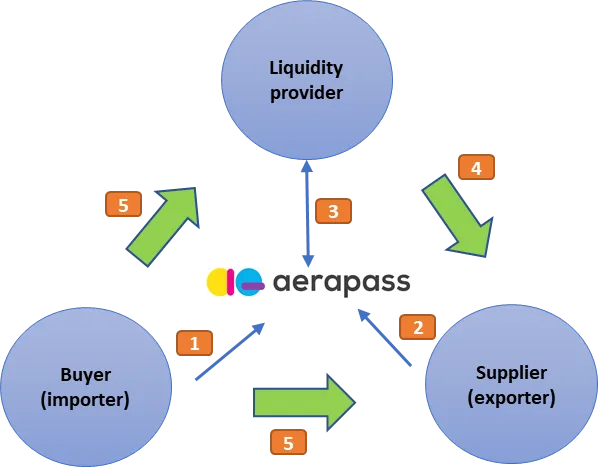
Platforms like Aerapass provide the underlying exchange and custody technology that enables financial institutions and wealth managers to offer tokenized commodity products alongside traditional asset classes. This infrastructure-first approach allows multiple product issuers to operate on shared rails, reducing the cost and complexity of bringing new tokenized metals to market.
As the tokenization of non-gold precious metals matures, the infrastructure challenge will shift from proving the concept to scaling it - supporting multi-metal portfolios, cross-chain interoperability, and regulatory compliance across jurisdictions.
Ready to build multi-metal tokenized products? Explore how Aerapass supports precious metals trading and custody
The content on this page is produced by Aerapass for general informational purposes only and does not constitute financial advice, investment advice, or any other form of professional advice. Aerapass is a technology platform provider serving financial institutions, wealth managers, and fintech companies. Before making any financial decision, you should consult with a qualified, licensed financial advisor who can take your individual objectives and circumstances into account.