What Is Gold Tokenization?
What Is Gold Tokenization?
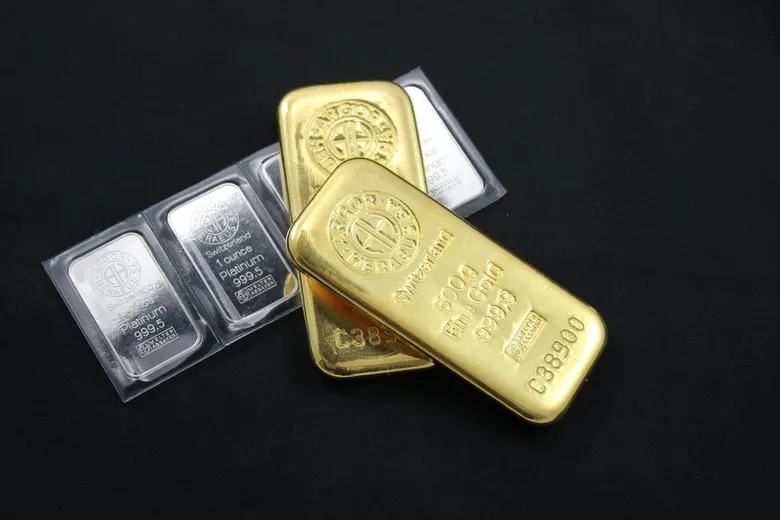
Gold tokenization is the process of converting physical gold bullion into digital tokens on a blockchain, where each token represents a verified claim on a specific quantity of vaulted, LBMA-certified gold. These tokens can be bought, sold, and transferred around the clock without moving the underlying metal. The tokenized gold market is worth more than $5 billion in market capitalization (CoinGecko, 7 Oct 2026), driven by demand for fractional, liquid exposure to physical bullion.
Contents
- How Does Gold Tokenization Work?
- Gold Tokenization Market Size and Growth
- Types of Tokenized Gold Products
- LBMA Standards and Why They Matter
- Tokenized Gold vs Physical Gold vs Gold ETFs
- Benefits of Tokenized Gold for Institutional Investors
- Risks and Considerations
- How to Access Tokenized Gold Through Aerapass
- Frequently Asked Questions
How Does Gold Tokenization Work?
Gold tokenization follows three steps that create a verifiable chain of custody from physical metal to digital asset. A token is only as good as the gold behind it and the infrastructure securing it.
- Vaulting - Gold bars meeting London Bullion Market Association (LBMA) Good Delivery standards (LBMA) are stored with custody providers such as Brink’s (Paxos) and Le Freeport Singapore. Issuers publish independent attestations of their reserves - monthly for PAXG (Paxos) and quarterly for XAUT (Tether).
- Issuance - The issuer mints tokens on a blockchain through a smart contract, with each token representing a defined quantity of gold, commonly one troy ounce. The two largest products were issued on Ethereum, and PAXG added Solana in June 2026 (Paxos).
- Trading and redemption - Tokens trade 24/7 on supported platforms. To redeem, a holder returns tokens to be burned in exchange for physical gold or, with some issuers, cash at market prices (Paxos). Physical delivery usually means redeeming a whole Good Delivery bar of 350-430 troy ounces (LBMA).
For the full technical detail, including smart contracts, oracle price feeds, on-chain proof of reserves and how the main blockchains compare, see our technical guide to how gold tokenization works.
Gold Tokenization Market Size and Growth
The tokenized gold market is worth more than $5 billion in market capitalization (CoinGecko, 7 Oct 2026). Two products dominate: Tether Gold (XAUT) at more than $3 billion and Paxos Gold (PAXG) at more than $1.5 billion, together accounting for close to 90% of the sector’s total capitalization (CoinGecko, 7 Oct 2026). Both are backed by LBMA Good Delivery gold - PAXG in London vaults (Paxos) and XAUT in Switzerland, where Tether reported 707,747 fine troy ounces in reserve at 30 June 2026 (Tether).
This growth reflects broader institutional momentum behind gold as a reserve asset. Central banks bought 1,092 tonnes of gold in 2024 and 863 tonnes in 2025, the first year below 1,000 tonnes after three years above that level (World Gold Council, Gold Demand Trends Full Year 2025). With gold at more than $4,000 per troy ounce in early October 2026 (CoinGecko, 7 Oct 2026), a single 400 oz bar costs more than $1.5 million, a barrier that has pushed allocators toward fractional and tokenized alternatives.
BCG and ADDX projected in September 2022 that asset tokenization could become a US$16.1 trillion business opportunity by 2030 (BCG/ADDX). Gold’s established custody infrastructure, standardized grading through LBMA, and deep liquidity make it among the most natural candidates for tokenization within the broader real-world asset movement.
Types of Tokenized Gold Products
Not all tokenized gold products offer the same quality of backing, regulatory oversight, or redemption options. The differences matter for institutions conducting due diligence on behalf of clients.
| Feature | XAUT (Tether Gold) | PAXG (Paxos Gold) | Aerapass Fractional Gold |
|---|---|---|---|
| Issuer | TG Commodities, S.A. de C.V. | Paxos Trust Company | Aerapass |
| Backing | LBMA Good Delivery | LBMA Good Delivery | LBMA hallmark bullion |
| Denomination | 1 troy oz per token (divisible into small fractions) | 1 troy oz per token (divisible to 18 decimals) | Fractional (from $10) |
| Blockchain | Ethereum, plus other networks | Ethereum, Solana | Blockchain ownership ledger |
| Custody | Switzerland | London (Brink’s) | Le Freeport, Singapore |
| Regulatory Status | Registered stablecoin issuer, El Salvador | OCC-regulated trust company | Operates across four major wealth centers |
| Redemption | Physical (delivery in Switzerland) | Physical Good Delivery bars (London) or cash | Whole bars once holding reaches standard bar weight |
| Reserve Reporting | Quarterly attestation | Monthly attestation (KPMG) | Independently audited vaults |
| Min. Purchase | Fractional | Fractional - 0.01 PAXG cost under $50 at early-October 2026 prices | $10 |
Sources: Tether Gold, Tether Q2 2026 reserves update, CoinGecko XAUT, Paxos PAX Gold, Paxos PAXG transparency, Paxos on Solana, Paxos launch post, CoinGecko tokenized gold (7 Oct 2026), Aerapass precious metals
XAUT and PAXG serve crypto-native holders who want gold exposure within their existing wallet infrastructure. Aerapass serves wealth managers and financial institutions seeking regulated, multi-asset trading infrastructure with precious metals as one component of a broader offering.
LBMA Standards and Why They Matter
The London Bullion Market Association sets the global benchmark for precious metals quality and trading practices. LBMA Good Delivery accreditation is the minimum standard institutional buyers should require for any gold-backed product - tokenized or otherwise.
Good Delivery bars must meet three criteria:
-
Refiner accreditation. The bar must be produced by an LBMA-accredited refiner. As of October 2026, more than 60 refiners appear on the LBMA’s current Good Delivery List for gold (LBMA Good Delivery List). Heraeus, Valcambi, Argor-Heraeus, and MKS PAMP are among the most widely recognized.
-
Purity standard. Minimum fineness of 995.0 parts per thousand (99.50% pure gold) (LBMA). Many refiners produce bars at higher fineness.
-
Weight and marking. Bars must contain between 350 and 430 fine troy ounces of gold, with each bar marked with a serial number, the refiner’s assay stamp, its fineness, and the year of manufacture (LBMA).
LBMA accreditation establishes fungibility: any Good Delivery bar can be substituted for any other in settlement. This underpins the London gold market, where net clearing transfers averaged $70.9 billion a day in June 2026 (LBMA). Tokens backed by non-LBMA gold cannot access this liquidity infrastructure, limiting their institutional utility.
For tokenized gold specifically, LBMA backing means the physical gold underlying each token meets the same standard used by central banks, sovereign wealth funds, and major bullion banks. This is not a marketing distinction. It is the difference between institutional-grade and retail-grade product.
Want fractional access to LBMA-certified gold? Aerapass lets wealth managers offer clients gold, silver, and platinum from $10 - backed by LBMA hallmark bullion vaulted at Le Freeport Singapore. Explore Aerapass precious metals
Tokenized Gold vs Physical Gold vs Gold ETFs
Each form of gold exposure serves different investor needs. The choice depends on trading frequency, custody preferences, minimum investment thresholds, and regulatory considerations.
| Feature | Tokenized Gold | Physical Bullion | Gold ETFs (GLD, IAU) |
|---|---|---|---|
| Ownership type | Direct claim on allocated gold | Direct physical possession | Shares in a trust holding gold |
| Trading hours | 24/7/365 | Exchange hours or OTC | Exchange hours (Mon-Fri) |
| Minimum investment | From $10 via Aerapass | Price of the smallest bar or coin | Price of 1 share (under $100 for IAU, under $400 for GLD, 6 Oct 2026) |
| Annual holding cost | No custody fee for PAXG or XAUT; purchase and redemption fees apply | Storage + insurance (varies by vault) | Expense ratio (0.25% IAU, 0.40% GLD) |
| Settlement speed | Minutes (on-chain) | T+2 (London spot) | T+1 (US equity settlement) |
| Physical redemption | Yes (minimum thresholds apply) | Already physical | Authorized participants only |
| Fractional divisibility | Up to 18 decimal places (PAXG) | Bars and coins only | Per-share only |
| Counterparty risk | Issuer + custodian | Vault operator (if stored) | Trust sponsor + custodian |
| Collateral use | DeFi lending, platform borrowing | Limited (delivery required) | Margin lending via broker |
| Regulation | Varies by jurisdiction | Physical commodity (minimal) | SEC-regulated securities |
Sources: author analysis based on Paxos, Tether Gold, SPDR Gold Shares (GLD), iShares Gold Trust (IAU), LBMA and the SEC T+1 rule
Tokenized gold offers the strongest combination of accessibility, divisibility, and trading availability. Physical gold remains preferred for holders who prioritize direct possession and minimal counterparty exposure. ETFs suit investors who want gold exposure through traditional brokerage accounts without managing custody.
To put accessibility in perspective: one of Singapore’s most accessible bank offerings, the OCBC Precious Metals Account, starts at 0.01 oz of gold (OCBC), and a single share of a US gold ETF costs from under $100 to under $400 depending on the fund (iShares IAU, SPDR GLD, 6 Oct 2026). Tokenized and fractionalised bullion through platforms like Aerapass reduces this barrier to $10 - making institutional-grade, LBMA-certified gold accessible to a far broader range of portfolio allocations.
For institutional allocators managing client portfolios across multiple asset classes, tokenized gold integrates into digital asset infrastructure without requiring separate custody arrangements for physical metal. For a detailed analysis of risk-adjusted returns, portfolio correlation data, and suitability considerations, see our assessment of whether tokenized gold is a good investment. Insurance companies and pension funds evaluating tokenised securities for portfolio diversification face similar custody integration considerations.
Benefits of Tokenized Gold for Institutional Investors
Tokenized gold addresses several structural limitations of traditional gold investment that are particularly relevant to wealth managers and financial institutions. For a practical walkthrough of the integration process, see our guide on how wealth platforms add tokenized gold to client portfolios.
Fractional access at institutional grade. A single 400 oz LBMA Good Delivery bar costs more than $1.5 million at early-October 2026 prices (CoinGecko, 7 Oct 2026). Even Singapore’s most accessible bank offering - OCBC’s Precious Metals Account - requires a minimum of 0.01 oz (OCBC). Aerapass’s Fractionalised Bullion Ownership reduces this to $10 for investment-grade gold, silver, and platinum, while maintaining the same LBMA backing that underlies central bank reserves. For wealth managers building diversified client portfolios, this means precious metals allocation is no longer gated by minimum purchase thresholds.
24/7 liquidity. Traditional gold markets operate during London, New York, and Asian exchange hours, and London spot trades settle T+2 (LBMA). Tokenized gold trades and settles continuously. For multi-timezone operations serving clients across Asia, Europe, and the Americas, this eliminates the timing friction that characterizes physical gold trading.
Programmable compliance. Smart contracts can embed KYC/AML checks, transfer restrictions, and reporting triggers directly into the token. This reduces operational overhead for compliance teams managing cross-border gold exposure across multiple regulatory jurisdictions.
Portfolio integration. Tokenized gold sits on the same infrastructure as other digital assets, enabling unified portfolio reporting, rebalancing, and risk management. Wealth managers can adjust gold allocations in real time alongside FX, equities, and crypto positions without switching platforms or custody providers.
Transparent custody verification. On-chain proof of reserves enables continuous, auditable verification of backing. Unlike ETFs, where investors rely on periodic trustee reports, tokenized gold platforms can provide real-time supply and reserve data that clients can independently verify.
Risks and Considerations
Gold tokenization introduces risks that differ from those of physical gold or ETFs. A balanced assessment is essential for institutional due diligence.
Smart contract risk. Token functionality depends on code deployed to a blockchain. Bugs, exploits, or governance vulnerabilities can result in loss of funds. Institutional buyers should verify whether the issuer’s contracts have been audited by reputable security firms and whether active bug bounty programs exist.
Regulatory uncertainty. The classification of tokenized gold varies by jurisdiction. Some regulators treat gold tokens as commodities; others classify them as securities or payment tokens. The EU’s Markets in Crypto-Assets (MiCA) regulation, which treats tokens referencing assets such as gold as asset-referenced tokens and has applied in full since December 2024 (ESMA), Singapore’s rules, and evolving U.S. guidance from the SEC and CFTC all apply differently. This fragmentation creates compliance complexity for cross-border operations.
Custodian counterparty risk. Token holders bear exposure to both the issuer’s and the custodian’s solvency and operational integrity. If an issuer becomes insolvent, redemption claims depend on whether the custody arrangement segregates or pools client gold. Holders should confirm allocated versus unallocated storage before committing capital.
Liquidity concentration. XAUT and PAXG account for close to 90% of the market’s capitalization (CoinGecko, 7 Oct 2026), concentrating liquidity in two products. Smaller tokenized gold offerings may face thin order books and wider spreads, increasing execution costs for institutional-size positions.
Redemption friction. While physical redemption is technically available, minimum thresholds (often a full Good Delivery bar of 350-430 oz), delivery logistics, and processing times mean most holders trade tokens rather than redeem. For smaller positions, the “gold-backed” claim is operationally limited.
Institutions evaluating tokenized gold alongside other strategies for wealth protection through physical assets should weigh these risks against the operational advantages of tokenized exposure and the specific safeguards each platform offers.
Building a multi-asset offering for your clients? Aerapass integrates precious metals, FX, crypto, and commodities under a single platform, and is licensed in four major wealth centers - Hong Kong, Singapore, Australia and Canada. See the Aerapass multi-asset exchange
How to Access Tokenized Gold Through Aerapass
Aerapass provides fractional precious metals ownership through its regulated platform, designed for wealth managers and financial institutions rather than retail investors.
The platform’s precious metals infrastructure includes:
- $10 minimum investment in LBMA-grade gold, silver, and platinum
- Custody at Le Freeport, Singapore - secure, insured, and audited vaults
- LBMA hallmark bullion, with refining standards supported by Heraeus
- Malca-Amit logistics for physical delivery
- Blockchain ledger providing a transparent record of ownership
- Bar redemption - fractional holdings can be converted into whole, physically deliverable bars once a balance reaches the standard bar weight
- API integration enabling wealth managers to embed precious metals into their own client-facing platforms
Precious metals sit within Aerapass’s broader multi-asset trading infrastructure, which includes FX, cryptocurrency, and commodity products under a single integration. Aerapass is licensed in four major wealth centers - Hong Kong, Singapore, Australia and Canada.
Frequently Asked Questions
What is gold tokenization?
Gold tokenization converts physical gold bullion into digital tokens on a blockchain. Each token represents ownership of a specific quantity of real, vaulted gold. The physical metal remains in secure custody while the token enables fractional ownership, 24/7 trading, and instant settlement without moving the underlying metal.
How does tokenized gold maintain its value?
Tokenized gold maintains its value through 1:1 backing with physical gold held in audited vaults. The token price tracks the spot gold price because holders can redeem tokens for physical metal, creating an arbitrage mechanism that keeps the token price aligned with the value of the underlying bullion.
Is tokenized gold safe?
Tokenized gold from established issuers is backed by LBMA-certified gold in independently audited vaults. However, token holders face smart contract risk, issuer counterparty risk, and regulatory uncertainty that physical gold holders do not. Safety depends on the specific product’s audit frequency, regulatory status, custody type (allocated vs. unallocated), and the issuer’s financial stability.
What fees are involved in buying tokenized gold?
Fees vary by platform. Common charges include a purchase spread or issuance fee (Tether Gold charges a one-time 0.25% fee when buying from or redeeming with the issuer), any annual custody fee (PAXG and XAUT charge none), and network transaction fees for on-chain transfers (Tether Gold, Paxos). Some platforms also charge redemption fees for converting tokens back to physical gold or cash. Compare total cost of ownership, not just the headline purchase fee, before selecting a platform.
How is tokenized gold regulated?
Regulation varies by jurisdiction and product structure. Paxos, the issuer of Paxos Gold (PAXG), is a trust company regulated by the U.S. Office of the Comptroller of the Currency (Paxos). Tether Gold’s issuer is registered as a stablecoin issuer in El Salvador (Tether). The EU’s MiCA regulation treats gold-referencing tokens as asset-referenced tokens (ESMA). No single global regulatory standard exists.
What is the minimum investment for tokenized gold?
Minimums start at $10 on platforms like Aerapass. PAXG and XAUT are both divisible into small fractions of an ounce - 0.01 PAXG cost under $50 at early-October 2026 prices (CoinGecko, 7 Oct 2026), and XAUT can be held in small fractions of an ounce (Tether Gold). Minimum order sizes depend on the exchange or platform used.
Can tokenized gold be redeemed for physical gold?
Yes. Most major tokenized gold products offer physical redemption. PAXG holders can redeem for LBMA Good Delivery bars held in London vaults (Paxos). XAUT offers physical delivery to addresses in Switzerland (Tether Gold). Minimum redemption thresholds typically apply, and delivery of a Good Delivery bar means redeeming a whole bar of 350-430 troy ounces. Some issuers also allow conversion to cash at market prices.
Regulatory Disclosure: This article is for educational purposes only and does not constitute investment advice. Gold prices fluctuate and past performance does not guarantee future results. Investors should conduct their own due diligence before making investment decisions.
Sources cited: World Gold Council (Gold Demand Trends Full Year 2025 - Central Banks), London Bullion Market Association (Good Delivery specifications, Good Delivery List, Net clearing data June 2026), CoinGecko (Tokenized Gold, 7 Oct 2026), BCG/ADDX (Relevance of On-Chain Asset Tokenization in 'Crypto Winter', 2022), Paxos (PAX Gold), Tether Gold, ESMA (MiCA).
The content on this page is produced by Aerapass for general informational purposes only and does not constitute financial advice, investment advice, or any other form of professional advice. Aerapass is a technology platform provider serving financial institutions, wealth managers, and fintech companies. Before making any financial decision, you should consult with a qualified, licensed financial advisor who can take your individual objectives and circumstances into account.