Wealth Management Software: 7-Point Guide
Key Takeaways
- The global wealthtech solutions market reached approximately $8-10 billion in 2026, growing at 15.3% CAGR (Mordor Intelligence)
- 52% of financial advisors now use AI tools in their practice, up from 41% in 2025 (T3/Inside Information Software Survey 2026)
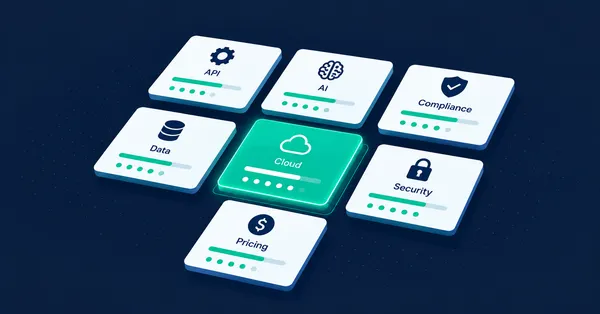
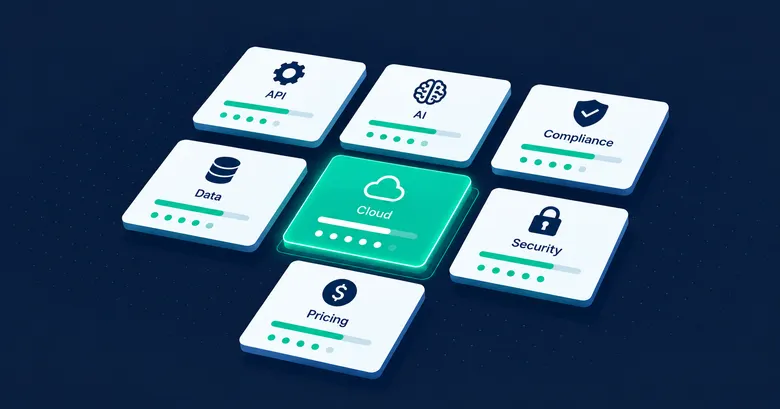
- Evaluate platforms across seven dimensions: API architecture, AI/ML capabilities, regulatory coverage, data integration, cloud deployment, security, and pricing
- Three deployment models each serve different needs: generic SaaS (broadest features), white-label (fastest to market, full branding), custom build (maximum control, highest cost)
- Compliance automation and multi-jurisdictional support are the two capabilities most likely to differentiate platforms in 2026-2028
Selecting wealth management software is one of the most consequential technology decisions a financial advisory firm will make. The platform you choose determines your operational efficiency, client experience, regulatory posture, and ability to scale. With the global wealthtech market now valued at approximately $8-10 billion and growing at 15.3% annually (Mordor Intelligence), the options are expanding rapidly - making an informed, structured evaluation more important than ever.
This guide provides an objective framework for evaluating wealth management software solutions, covering the criteria that matter most in 2026 and the trade-offs between different deployment approaches.
What Is Wealth Management Software?
Wealth management software is a technology platform that enables financial advisory firms to manage client portfolios, automate compliance, generate reports, and deliver client-facing services through a unified interface. Modern wealth management software platforms integrate portfolio analytics, CRM, risk management, regulatory reporting, and client portals into a single operational layer.
The global wealthtech market reached approximately $8-10 billion in 2026 (15.3% CAGR), according to Mordor Intelligence, driven by AI adoption (52% of advisors now use AI tools, per the T3/Inside Information Software Survey 2026), multi-jurisdictional compliance requirements, and growing demand for solutions that accelerate time to market without sacrificing regulatory coverage.
Step 1: Understand the Three Deployment Models
Before evaluating specific vendors, understand the fundamental trade-offs between the three main approaches to wealth management technology. Each deployment model involves different trade-offs in cost, timeline, control, and maintenance burden.
Wealth Management Software: Build vs. Buy vs. White-Label Comparison
| Feature | Generic SaaS Platform | White-Label Platform | Custom Build |
|---|---|---|---|
| Time to Launch | 1-3 months | 1-2 weeks | 6-18 months |
| Branding Control | Limited (vendor branding visible) | Full customization (your brand only) | Full |
| Compliance Built-in | Varies by vendor | Typically multi-jurisdictional (MAS, FINRA, SEC, FCA) | Must build and maintain |
| CRM Integration | Usually available | Yes, with API connectivity | Must build |
| AI/ML Capabilities | Vendor-dependent | Platform-native or API-integrated | Must build and maintain |
| Total Cost (3 years) | $$$ (subscription) | $$ (platform fee) | $$$$ (development + maintenance) |
| Scalability | Platform-dependent | Cloud-native, auto-scaling | Architecture-dependent |
| Digital Asset Support | Rare | Available on some platforms | Must build |
| Ongoing Maintenance | Vendor-managed | Vendor-managed | In-house team required |
Note: Cost and feature comparisons are generalized. Specific vendor capabilities vary significantly.
Generic SaaS platforms offer the broadest feature sets and the most established track records in traditional asset classes. They suit firms that need comprehensive out-of-the-box functionality and are comfortable operating within the vendor’s product roadmap. The trade-off is limited branding control and less flexibility to differentiate the client experience.
White-label platforms provide the fastest path to market with full branding control. Platforms like Aerapass handle compliance, infrastructure, and maintenance while the firm focuses on client relationships and investment strategy. This model is a key reason independent wealth managers are switching to white-label platforms. The trade-off is that firms are dependent on the white-label provider’s feature set and update cadence.
Custom builds offer maximum control over every aspect of the platform - from user experience to data architecture to compliance logic. They suit firms with truly proprietary investment models or unique workflows that no platform supports. The trade-off is substantial: custom builds require dedicated development teams, ongoing maintenance budgets, and in-house regulatory engineering. Costs frequently exceed initial projections by 2-3x.
Each model involves different trade-offs in cost, timeline, control, and maintenance burden. The right choice depends on your firm’s specific priorities, which the evaluation framework below helps you assess.
Step 2: Evaluate Across Seven Critical Dimensions
Regardless of which deployment model you choose, evaluate every platform against these seven criteria. The weight you assign to each depends on your firm’s size, client base, regulatory environment, and growth plans.
Beyond the platform itself, evaluate the vendor’s implementation methodology. The best wealth management software becomes a liability if the implementation partner lacks experience in your regulatory environment or firm size. Ask for references from firms with comparable AUM, jurisdiction mix, and operational complexity.
Wealth Management Platform Evaluation Matrix
| Dimension | What to Evaluate | Questions to Ask the Vendor | Why It Matters in 2026 | Source |
|---|---|---|---|---|
| API Architecture | REST/GraphQL APIs, webhook support, sandbox environment | ”Can we access all platform data via API? Is there a developer sandbox?” | Open APIs enable integration with existing tools and future flexibility | Celent, 2025 |
| AI/ML Capabilities | Portfolio analytics, risk scoring, client insights, document processing | ”Which AI features are native vs. third-party? Can we bring our own models?“ | 52% of advisors use AI tools; platforms without AI will lose competitiveness | T3/Inside Information Survey, 2026 |
| Regulatory Coverage | Jurisdictions supported, reporting automation, compliance updates | ”Which regulators are you currently certified with? How fast do you implement new regulations?” | MiCA, GENIUS Act, and MAS PSA changes require rapid platform updates | Industry analysis |
| Data Integration | Market data feeds, custodian connections, accounting system links | ”How many custodian integrations do you support? What’s the data refresh frequency?” | Fragmented data is the #1 operational pain point for advisory firms | Cerulli Associates, 2025 |
| Cloud Deployment | Multi-region hosting, uptime SLA, disaster recovery, data residency | ”Where is client data hosted? What’s your uptime SLA? Do you offer data residency options?” | Data sovereignty requirements vary by jurisdiction and client type | Industry standard |
| Security | Encryption standards, SOC 2/ISO 27001, pen testing, access controls | ”Do you have SOC 2 Type II? When was your last penetration test? What encryption is used at rest and in transit?” | Deepfake fraud up 700% in fintech; security is existential | Gartner, 2025 |
| Pricing Model | Per-AUM, per-user, flat fee, hybrid; implementation costs; exit costs | ”What are the total costs at 2x and 5x our current scale? What does it cost to leave?” | Pricing transparency prevents budget surprises as the firm grows | Industry standard |
Sources: Celent WealthTech Trends 2025, T3/Inside Information Software Survey 2026, Cerulli Associates State of US Wealth Management Technology 2025.
This seven-dimension matrix functions as a reusable evaluation checklist. Score each vendor against these criteria, weight them according to your firm’s priorities, and use the resulting comparison to structure vendor conversations and internal decision-making.
Step 3: Assess AI Capabilities Critically
AI is the fastest-moving capability in wealthtech. The 2026 T3/Inside Information Software Survey found that 52% of advisors now use AI tools, up from 41% in 2025, with AI notetaking solutions seeing explosive growth (14 new entrants in a single year, reaching 42.86% aggregate market share).
When evaluating AI capabilities, distinguish between:
Native AI (built into the platform):
- Portfolio risk analytics and scenario modeling
- Automated client report generation
- Compliance monitoring and anomaly detection
- Client sentiment analysis from communication patterns
Integrated AI (third-party tools connected via API):
- ChatGPT, Copilot, Gemini for research and drafting
- Specialized tools for tax-loss harvesting or estate planning
- AI notetaking for meeting documentation
Questions to ask:
- Which AI capabilities are native to the platform vs. dependent on third-party APIs?
- How is client data handled when processed by AI features - does it leave the platform?
- Can the firm bring its own AI models or fine-tune existing ones?
- What happens to AI features if a third-party provider changes terms or pricing?
Step 4: Prioritize Compliance Automation
In 2026, regulatory complexity is accelerating across every major jurisdiction. MiCA, the GENIUS Act, MAS PSA amendments, and DORA all impose new requirements on wealth management platforms. A platform that automates compliance reporting, monitors regulatory changes, and supports multi-jurisdictional operations provides tangible risk reduction.
Key compliance capabilities to evaluate:
- AML/KYC automation: Ongoing customer due diligence, sanctions screening, and suspicious transaction reporting aligned with FATF standards
- Regulatory reporting: Automated generation of jurisdiction-specific reports (MAS, FINRA, SEC, FCA)
- Audit trails: Immutable records of all client interactions, portfolio changes, and compliance decisions
- Regulatory update cadence: How quickly does the vendor implement new regulatory requirements?
Firms operating across Singapore (MAS), Hong Kong (SFC), Australia (ASIC), and other APAC jurisdictions should evaluate whether the platform supports jurisdiction-specific regulatory reporting natively or requires add-on modules. The difference affects both cost and reliability - add-on compliance modules often lag behind regulatory changes. For a detailed breakdown of how MiCA, MAS, and ASIC frameworks affect digital asset and wealth management platforms, see navigating regulatory compliance for financial platforms.
When evaluating compliance automation, request a live demonstration of the platform’s reporting capabilities for every jurisdiction where your firm operates. Automated reports that require manual review defeat the purpose.
Applying this framework to your platform evaluation? Aerapass offers structured evaluations and sandbox access for firms considering platform migration. See how Aerapass supports wealth managers
Step 5: Test Before Committing
No evaluation framework replaces hands-on experience. Before committing to any platform:
Request a sandbox environment: Test API integrations, data imports, and workflow configurations with realistic data volumes. A demo with curated scenarios will not reveal performance issues.
Talk to existing clients: Ask the vendor for references at firms similar to your size and regulatory profile. Ask about implementation timelines, hidden costs, and support responsiveness.
Stress test compliance features: Run through a complete compliance scenario - client onboarding, suspicious transaction detection, regulatory report generation - end to end.
Evaluate the exit path: Understand data portability. Can you export all client data in standard formats? What are the contractual and technical costs of migrating away?
Step 6: Factor in the Client Experience
Client Portals: Modern wealth management clients expect self-service access to portfolio performance, documents, and communication tools. Evaluate the platform’s client-facing interface for mobile responsiveness, real-time data updates, and branding consistency.
Onboarding Flow: Digital onboarding with integrated KYC, risk profiling, and e-signatures reduces time-to-revenue and creates a professional first impression.
Communication Tools: Secure messaging, video conferencing integration, and document sharing capabilities reduce reliance on email and improve compliance documentation.
The client experience comparison is where the build-vs.-buy-vs.-white-label decision becomes tangible. Generic SaaS platforms may limit how the client portal looks and functions. White-label platforms offer full branding control with pre-built UX. Custom builds provide unlimited flexibility but require dedicated UX and design resources. For private wealth management software, the client-facing experience is often the primary differentiator - evaluate it with the same rigor as back-office functionality.
Making the Decision
The right wealth management software depends on your firm’s specific priorities:
- For firms prioritizing speed to market and compliance coverage: Evaluate white-label platforms. They offer the fastest deployment (1-2 weeks) with built-in regulatory frameworks.
- For firms with unique workflows or proprietary investment models: Evaluate custom builds. The higher cost and longer timeline may be justified by full control over every component.
- For firms wanting the broadest feature set with minimal customization: Evaluate generic SaaS platforms. Established vendors offer mature functionality across traditional asset classes.
In every case, structuring your evaluation around the seven dimensions above - API architecture, AI capabilities, regulatory coverage, data integration, cloud deployment, security, and pricing - ensures you are comparing platforms on the criteria that will matter most over the next three to five years.
For a detailed look at how white-label wealth management platforms work, see our white-label platform guide.
Summary
Choosing the best wealth management software requires structured evaluation across seven dimensions: API architecture, AI capabilities, regulatory coverage, data integration, cloud deployment, security, and pricing. Each deployment model - generic SaaS, white-label, and custom build - serves different priorities, and the right choice depends on your firm’s regulatory environment, client expectations, timeline, and budget. AI adoption among advisors reached 52% in 2026, making native AI capabilities a competitive requirement rather than a differentiator. For firms operating across jurisdictions, compliance automation (MiCA, MAS PSA, GENIUS Act, DORA) is the primary operational consideration. Use the seven-dimension evaluation matrix as a structured checklist to compare vendors on the criteria that matter most.
Frequently Asked Questions
How do I choose wealth management software for my RIA? Start by identifying your firm’s priorities: speed to market, branding control, regulatory requirements, and budget. Evaluate platforms across seven dimensions - API architecture, AI capabilities, regulatory coverage, data integration, cloud deployment, security, and pricing. Test with a sandbox environment before committing. Consider which deployment model fits: generic SaaS for breadth, white-label for speed and branding, or custom build for unique workflows. For RIAs managing under $500M AUA, the cost and complexity of a custom build are rarely justified.
Should I build custom wealth management software or use an existing platform? White-label platforms launch in 1-2 weeks with full branding and built-in compliance. Custom builds take 6-18 months, frequently cost 2-3x initial projections, and require in-house regulatory engineering. Generic SaaS platforms fall between these extremes - faster than custom but less flexible than white-label on branding. Custom builds make sense only for firms with truly unique workflows or proprietary investment models that no existing platform supports. For most firms, an existing platform - whether SaaS or white-label - provides better time-to-value.
What AI capabilities should wealth management platforms offer in 2026? Evaluate native AI features (portfolio analytics, risk scoring, automated reporting, compliance monitoring) separately from integrated third-party tools (ChatGPT-powered research, AI notetaking, tax-loss harvesting). Key questions: does client data leave the platform when AI processes it? Can you bring your own models? What happens if a third-party AI provider changes terms? The 2026 T3/Inside Information Software Survey found AI notetaking had 14 new entrants in a single year.
What compliance features are essential for wealth management software? In 2026, platforms must support AML/KYC automation (ongoing due diligence, sanctions screening), jurisdiction-specific regulatory reporting (MAS, FINRA, SEC, FCA), immutable audit trails, and rapid implementation of new regulations. MiCA, the GENIUS Act, MAS PSA amendments, and DORA all imposed new requirements in 2024-2026 - evaluate how quickly vendors implement regulatory changes.
What is a wealth management platform evaluation checklist? Evaluate across: (1) API architecture - open APIs, sandbox environment, webhook support; (2) AI/ML - native vs. integrated, data handling; (3) Regulatory coverage - jurisdictions, update cadence; (4) Data integration - custodian connections, refresh frequency; (5) Cloud deployment - uptime SLA, data residency; (6) Security - SOC 2 Type II, encryption, pen testing; (7) Pricing - total cost at 2x/5x scale, exit costs. Test with realistic data before committing.
References
- Celent. WealthTech Trends 2025. API architecture and platform evolution analysis.
- T3/Inside Information. Software Survey 2026. Advisor AI adoption and market share data.
- Cerulli Associates. State of US Wealth Management Technology, 2025.
- Gartner. Security and Identity Verification Predictions for Financial Services, 2025.
- Oliver Wyman. Global Wealth Management Report, 2025. Market sizing and growth forecasts.
- PwC. Global Wealth Management Survey, 2025. Client retention and technology adoption.
- BCG. Global Wealth Report, 2025. Wealth transfer and industry trends.
Need help evaluating wealth management software? Aerapass offers structured evaluations for firms considering platform migration. Explore Aerapass for wealth managers
The content on this page is produced by Aerapass for general informational purposes only and does not constitute financial advice, investment advice, or any other form of professional advice. Aerapass is a technology platform provider serving financial institutions, wealth managers, and fintech companies. Before making any financial decision, you should consult with a qualified, licensed financial advisor who can take your individual objectives and circumstances into account.